Superstar Hockey
- 4.7
- Rating
- 1.00M
- Installs
- Free
- Price

 Analysis by App-foxy
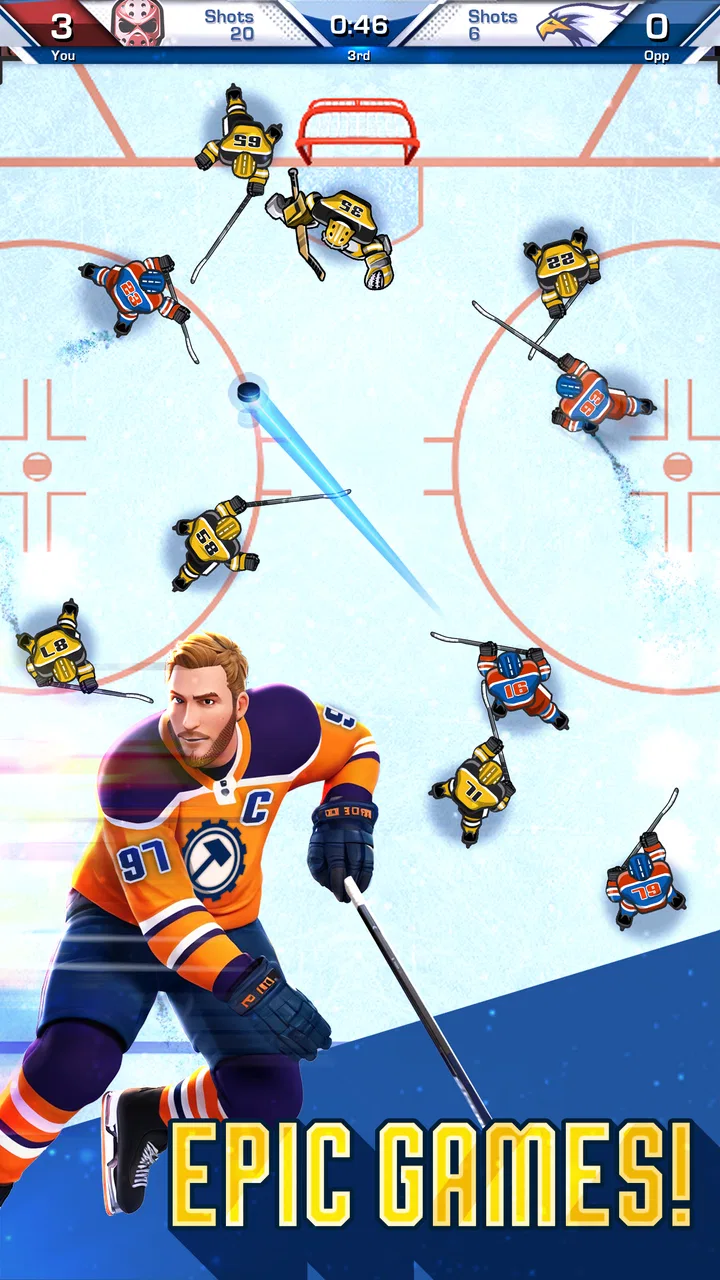
Superstar Hockey is the kind of sports game I can open for a quick match and still find myself playing several games later. Big Idea Games Inc. keeps the focus on building a team of real all stars and putting them into a deliberately retro-style hockey brawl, so the appeal is immediate rather than buried under a complicated simulation. I found it easiest to enjoy when I treated it as an arcade sports game first and a team-building game second.
That distinction matters. If you want a detailed hockey simulator with exhaustive tactics, realistic league management, and a slow season structure, this probably will not replace your usual console or mobile simulation. If you want short, energetic hockey sessions with a collection to improve over time, it has a much clearer purpose. The game is free to play, rated Everyone, and has attracted a 4.7 average from around 41 thousand ratings, which matches my impression that its accessible presentation is a major part of the appeal.
How I settled into the basic match-and-team routine
My normal starting point was simple: play a match, see where the current lineup felt weak, then return to team building before immediately chasing another upgrade. That rhythm works well because the game gives the action and the roster-building layer different jobs. Matches provide the excitement, while the collection gives repeat sessions a reason to continue.
You May Also Like

 Google Keep - Notes and lists
Google Keep’s Quiet Growth Shows the Appeal of Simpler Notes
As mobile work gets busier, Google Keep keeps winning a simple contest: capture a thought quickly, find it later, and get on with the day.

 Blood Strike: 2.5 Anniversary
Blood Strike’s Loadouts Turn Every Drop Into a Tactical Gamble
A close look at Blood Strike’s custom loadouts: how fast access to signature weapons reshapes its battle royale rhythm, rewards preparation, and narrows the gap between fights.

 Pandora - Music & Podcasts
Pandora’s Music Is Easy to Start, but Harder to Recover
Pandora’s strength is its low-effort path from a seed to a station. Its weak spot is how much confidence it asks you to place in connection, setup, and quiet recovery.

 8 Ball Pool
 Is Built on Rivalries, Rematches, and Routine
A close look at the rivalries, rematches, shared routines, and unanswered safety questions that turn a quick pool match into a persistent mobile community.

 Samsung Music
’s Quiet Strength Is Playing What You Already Own
Its reach comes less from spectacle than from dependable access to a personal library. That simplicity is both the app’s strongest retention engine and its ceiling.

 AccuWeather: Weather Radar
AccuWeather Review: A Quick, Clear Forecast for Everyday Decisions
For everyday plans, the best forecast is the one you can understand quickly. AccuWeather makes rain timing, radar, and local conditions easy to act on, with a few trade-offs.
More From Our News Desk



The retro presentation helps keep the controls approachable. I did not feel that I needed to memorize a large set of commands before I could enjoy a game. The important early lesson is to avoid treating every possession as a chance to force something spectacular. Passing, creating space, and waiting for a cleaner opportunity usually felt more reliable than constantly attacking the same way.
For a newcomer, I recommend playing several matches before spending resources impulsively. The first few games are useful for learning how quickly situations change and which parts of your lineup feel uncomfortable. A player who looks attractive on paper may not solve the problem you notice during actual play. Sometimes the better improvement is simply becoming more patient with possession and learning when to defend rather than chasing every action.
The game fits especially well into ordinary spare-time situations. I could imagine playing it during a short break, finishing a couple of matches, and putting it away without needing to commit to a long campaign. That makes it more convenient than a full sports simulation when I only want immediate interaction. At the same time, the team-building layer gives me a reason to return when I have more time.
There is also a useful mental separation between a bad result and a bad roster. A lost match does not automatically mean the team needs an expensive change. I found it more sensible to identify whether the issue was poor timing, predictable attacks, weak defensive positioning, or a genuine lineup problem. This habit prevents the collection system from turning every defeat into pressure to spend.
The first settings and habits I would check
I would begin by checking the available control and presentation options before settling into a long session. Even small adjustments to how the game feels in the hand can affect whether the action seems readable. I would also make sure the device is comfortable to use in both short and extended sessions, because fast sports gameplay becomes frustrating when the screen is crowded by fingers or the controls feel awkward.
I do not recommend changing everything at once. Adjust one control preference, play enough matches to judge it, and then decide whether it genuinely helps. Changing several things together makes it difficult to understand what improved your play. This is a practical approach for any player who feels that missed actions are caused by the interface rather than by decision-making.
Audio and visual presentation deserve a quick check as well. The retro style is part of the identity, not merely decoration, and some players will enjoy its energetic look more when distractions are reduced. Others may prefer a quieter setup for public places. Since this is a game I can use in short bursts, I found it valuable to prepare a comfortable repeatable setup instead of adjusting the experience every time I opened it.
One of the most useful settings-related habits is deciding when not to optimize. If the controls already feel clear, leave them alone and focus on reading the play. Endless tweaking can become a substitute for practice. I would only revisit settings after a real problem appears, such as consistently misreading an action or finding the layout uncomfortable during longer matches.
Repeatable patterns that make matches less frantic
My strongest improvement came from using a repeatable opening routine. Rather than rushing toward the first available attack, I tried to establish possession, look for the safest forward option, and only then commit. This reduced the number of hurried decisions and made the match feel more deliberate without removing the arcade energy.
Another useful pattern is to vary the direction and timing of attacks. Repeating the same approach may work briefly, but it becomes easy to anticipate. I found that alternating between patient buildup and a quicker push made my play less predictable. This is not a complicated tactic; it is simply a reminder that speed is most effective when it is occasional rather than constant.
On defense, I learned to value positioning over frantic movement. Chasing the puck or the opposing player can leave a dangerous gap behind the first challenge. When I slowed down enough to protect the more important space, I conceded fewer easy opportunities. That is one of the less obvious lessons for players arriving from casual arcade games: the game feels fast, but the best response is not always the fastest input.
Team improvements should follow the same logic. I would keep a short note of the problem I am trying to solve before making a change. For example, if the team struggles to finish chances, I would not automatically replace several players. I would first check whether I am creating poor opportunities. If the problem remains after better execution, then a roster adjustment has a clearer purpose.
This approach also helps with the free-to-play economy. In-app purchases range from $0.99 to $99.99 per item, so I would advise setting a personal spending limit before becoming invested in the collection side. The game is more enjoyable when purchases are treated as optional acceleration rather than as the expected solution to every weakness. Players who prefer completely fixed progression should be aware that this structure may feel less comfortable than a one-time paid game.
Where the collection layer helps and where it can distract
The roster-building idea gives Superstar Hockey more staying power than a simple series of exhibition matches. Collecting recognizable all stars makes each improvement feel personal, and it encourages me to think about how the full team works rather than focusing on one favorite player. The best use of this layer is to create a clear development goal: improve the area that most often affects your matches.
The danger is chasing novelty instead of solving a problem. A new name can be exciting, but a stronger-looking addition is not automatically the most useful one. I recommend comparing a potential upgrade with the role it needs to fill. If the current team already performs well in one area, adding more of the same may produce less practical value than improving a weakness.
Players who enjoy collecting will probably get more from repeated sessions than players who only want a single polished match. The collection adds a reason to return, but it also means that progress can feel less direct than in a traditional paid sports game. I personally liked having a longer-term objective, although I understand why someone seeking a pure pick-up-and-play experience might prefer fewer menus and decisions between matches.
Because the game is categorized as a sports title and carries an Everyone age rating, it is easy to recommend as an approachable introduction to hockey-themed mobile play. That does not mean every child will find the progression equally simple, especially if they are not familiar with resource choices. I would still encourage younger players to understand purchase settings and spending boundaries with an adult.
Limits experienced players should understand
After the initial excitement, the main limitation is that the retro brawl format will not satisfy everyone who wants authentic hockey depth. The compact, energetic design is a strength for quick play, but it also places a ceiling on realism. If your priority is detailed line management, granular strategy, or a faithful simulation of a full hockey season, a dedicated simulator is the better choice.
The free-to-play structure is another point to consider. The game costs nothing to start, which makes trying it easy, but optional purchases can change how some players experience progression. Someone comfortable with gradual improvement can simply treat the collection as a long-term project. Someone who dislikes any pressure around upgrades may find the design less appealing even if the matches themselves are enjoyable.
I also would not choose it primarily for competitive seriousness. Its personality comes from accessible action and the fun of assembling a team, not from presenting itself as a strict professional training tool. That makes it friendly for casual players but less suitable for someone who wants every result to reflect deep simulation accuracy.
Storage and attention are practical considerations too, even without turning them into deal-breakers. A game with a match loop and a collection loop can encourage “one more game” behavior. I found it helpful to decide whether I was playing for a quick break or for roster progress before starting. That small boundary kept the game relaxing instead of letting a short session become an unplanned grind.
The current version is 1.10.8, and the game supports devices running Android 7.0 or later. That makes it usable on a broad range of Android phones, although the experience can still depend on the device’s screen, controls, and general performance. I would check the phone’s comfort and responsiveness during a short session before committing to extended play.
Who should download it and who should look elsewhere
I would recommend Superstar Hockey to someone who likes sports games with quick matches, recognizable stars, and a reason to keep improving a roster. It is particularly suitable for players who enjoy making small, purposeful upgrades and learning a compact action system over repeated sessions. The free entry point also makes it easy to test without first committing to a purchase.
I would be more cautious recommending it to a player who dislikes collection mechanics or optional spending entirely. The purchase range can be significant, and although spending is not the only way to approach the game, the presence of those options will matter to some people. A premium sports game with a fixed price may be a better fit for anyone who wants a predictable progression path.
I would also point simulation fans toward a more detailed hockey alternative. Superstar Hockey is at its best when I accept its retro identity and play within that framework. Comparing it directly with a serious management simulator is unfair to both games, because they are trying to deliver different experiences. Here, the winning combination is immediacy, personality, and team collection rather than exhaustive authenticity.
My verdict after building a routine around it
What kept me interested was not simply the idea of playing hockey on a phone. It was the way a short match could lead naturally into a small decision about the team, followed by another match where I could test that decision. That loop is easy to understand, but it rewards players who bring some discipline to it.
My advice is to start slowly, learn the controls before chasing upgrades, and make roster changes only when you can name the weakness they address. Check the settings once, create a comfortable control setup, and then rely on repeatable habits: protect space on defense, vary attacking speed, and avoid spending just because a match went badly.
With over one million installs, a free price, and a retro sports-brawl approach, Superstar Hockey has a clear audience. I see it as a strong choice for casual hockey fans and collection-minded players who want energetic sessions without the weight of a full simulation. Its limits are equally clear: the free-to-play progression and simplified sports design will not suit everyone.
For me, the final question is whether I want a quick, characterful hockey game or a comprehensive hockey simulator. When I want the first option, this game delivers a satisfying routine and enough team-building decisions to make returning worthwhile. When I want the second, I would choose something deeper. That honest distinction is why I can recommend it to the right friend without pretending it is designed for every kind of sports player.
FAQs for Superstar Hockey
01What is Superstar Hockey, and what kind of gameplay does it offer?
Superstar Hockey is a fast-paced mobile hockey game focused on quick matches, simple controls, and team progression. Instead of trying to simulate every rule and detail of professional hockey, it emphasizes accessible arcade-style action. You can control plays, take shots, defend your goal, and improve your roster as you advance. It is designed for short gaming sessions, making it suitable for casual players who want hockey action without a complicated learning curve.
02Is Superstar Hockey free to download and play?
Superstar Hockey can generally be downloaded without an upfront purchase, but players should expect optional in-app purchases depending on the version available in their region. These purchases may provide upgrades, resources, or other progression benefits. The game can be enjoyed without spending money, although progress may feel slower at certain points. Before downloading, check the Google Play Store or App Store listing for current pricing, supported devices, and any purchase-related information.
03Does Superstar Hockey require an internet connection?
The connection requirements may vary according to the platform version and the feature you are using. Basic gameplay or certain single-player activities may work with limited connectivity, while online events, advertisements, account synchronization, updates, and competitive features can require an active internet connection. If you plan to play while traveling or without mobile data, test the game in offline mode after installation, since some functions may not be available without access to the servers.
04Is Superstar Hockey suitable for children and younger players?
Superstar Hockey is generally easy for younger players to understand because its controls and match structure are straightforward. However, parents should review the game’s age rating, advertising practices, and in-app purchase settings before allowing children to play. Depending on the version, the app may include optional purchases, promotional content, or online-related features. Using parental controls and requiring purchase approval is recommended if the game will be installed on a child’s device.
05What devices are compatible with Superstar Hockey, and does it need much storage?
Compatibility depends on the specific Android or iOS release, so the most reliable information is shown on the official store page for your device. In addition to the required operating-system version, performance can vary according to your phone or tablet’s processor, memory, and available storage. The initial download may not be especially large, but updates and downloaded game data can increase its size. Keeping extra free space available should help prevent installation or performance problems.
Pros
- Quick matches make it easy to enjoy during short breaks.
- Simple controls are accessible for new players.
- Team upgrades add a satisfying sense of progression.
- Competitive modes provide extra replay value.
- Cartoon-style visuals give the game a cheerful atmosphere.
Cons
- Progress may feel slow without spending on upgrades.
- Opponent difficulty can become uneven in later matches.
- Limited tactical depth may disappoint serious hockey fans.
- Frequent rewards and prompts can interrupt the gameplay flow.
- An internet connection may be required for some features.

Superstar Hockey
Gallery